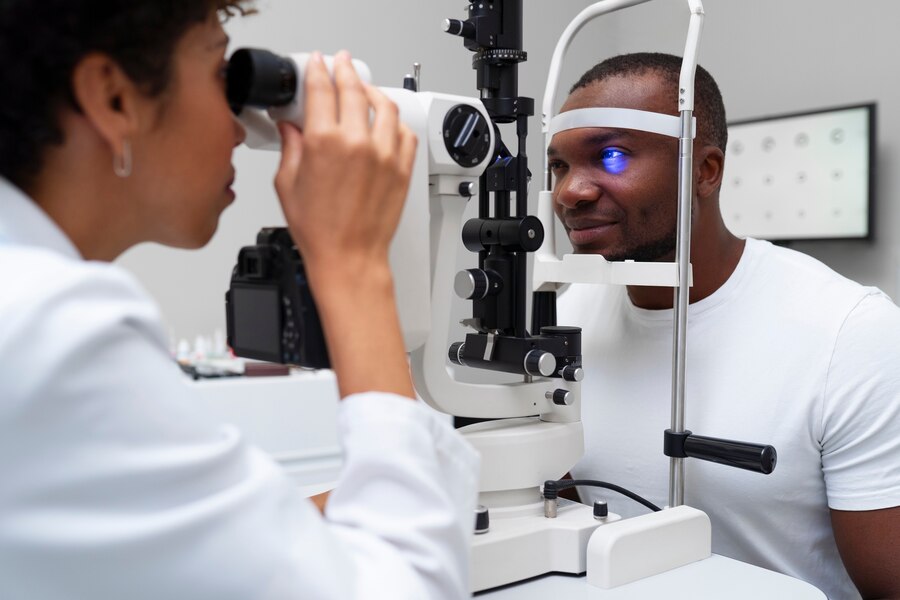
Ophthalmology is a branch of medicine dedicated to the study of the eye’s structure and function, and to the diagnosis and treatment of diseases affecting them.
Some of them are..
- Laser Eye Surgery
- Cataract Surgery
- Cornea Transplant
- Diabetic Retinopathy
- Glaucoma
- Macular Degeneration
- Corneal and external conditions—Expert care is provided for congenital corneal diseases, trauma and conditions requiring complex anterior segment reconstruction and corneal transplantation. Our contact lens service works closely with the cornea service to provide specialized care to our patients with complicated cornea problems.
- Dry eye—Treatment often begins with the use of artificial tears to more advanced options including medications such as Restasis, topical corticosteroids and oral tetracycline and doxycycline, or the use of tiny plugs placed in the tear drainage ducts to help moisture stay on the surface of the eye longer.
- Glaucoma—Treatment options for glaucoma include medication, laser surgery and microsurgery.
- Low vision—The Penn Center for Low Vision Rehabilitation is a state-of-the-art facility that combines the skills of ophthalmology, optometry and occupational therapy to make the most of vision that cannot be restored further through medical or surgical means.
- Neuro-ophthalmology—We evaluate and treat patients with vision loss from optic nerve disease, double vision, orbital abnormalities and disease and central nervous system disorders, such as stroke and multiple sclerosis (MS), which affect the eyes.
- Ocular oncology (eye cancer)—We offer the most advanced treatment approaches for malignant ocular tumors including proton therapy, photodynamic therapy and surgery.
- Retina and vitreous—Disorders of the retina and vitreous, which can be caused by many conditions, are often treated with medication or laser surgery.
- Thyroid eye disease/Graves’ Disease—Thyroid eye disease is an autoimmune condition that is associated with hyperthyroidism or Graves’ disease. Treatment for thyroid eye disease is complex and often involves several physicians including a neuro-ophthalmologist, an orbital specialist and an endocrinologist.
- Uveitis—Our services for ocular inflammation provide diagnosis and management of patients with ocular inflammatory diseases. We also manage ocular complications of systemic inflammatory and infectious diseases, and offer surgical management of ocular inflammation and its complications.